
TURN with International Student [Serbia] Workshop in Serbia
December 11 2025
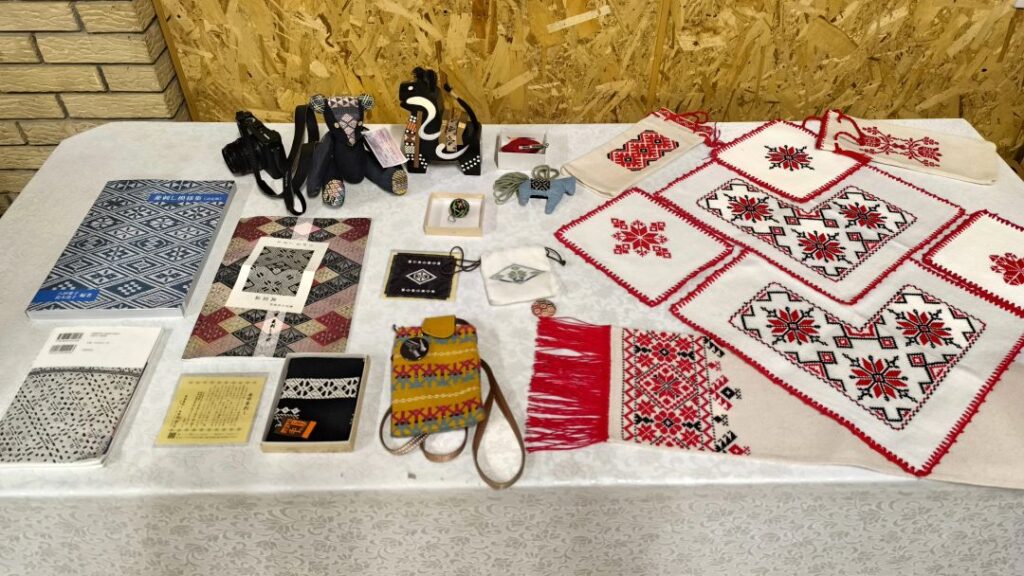
Artist Lea Embeli is doing a TURN project in her home country of Serbia. She has begun doing workshops with the local Székely ethnic community, focusing on traditional embroidery methods that they have passed down through generations.
She did the project in March 2025, building on her research about Aomori Prefecture’s sashiko embroidery and her experience with Hachinohe’s Nanbu hishizashi embroidery, while learning about the embroidery culture that has been transmitted within the Székely community.
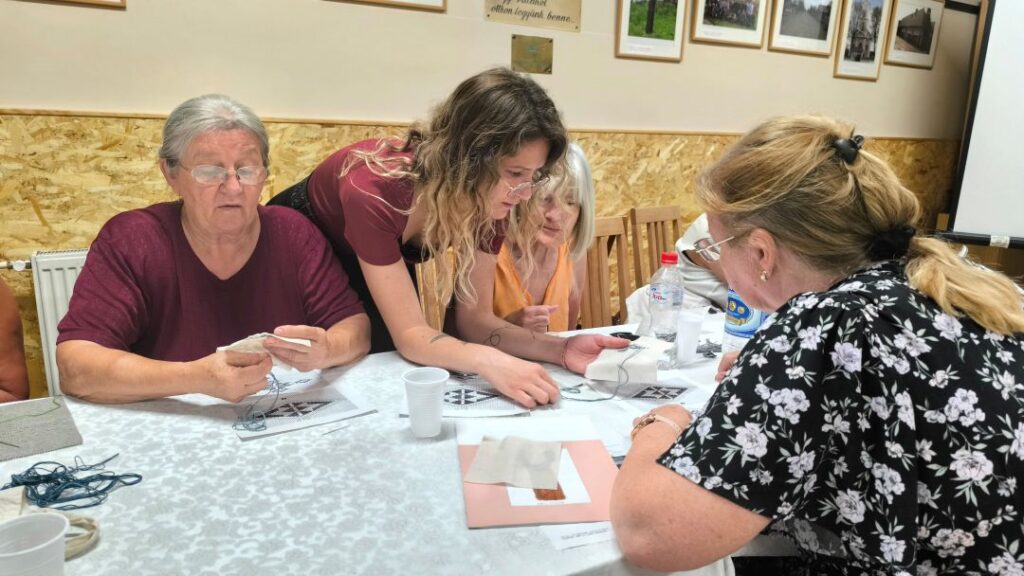
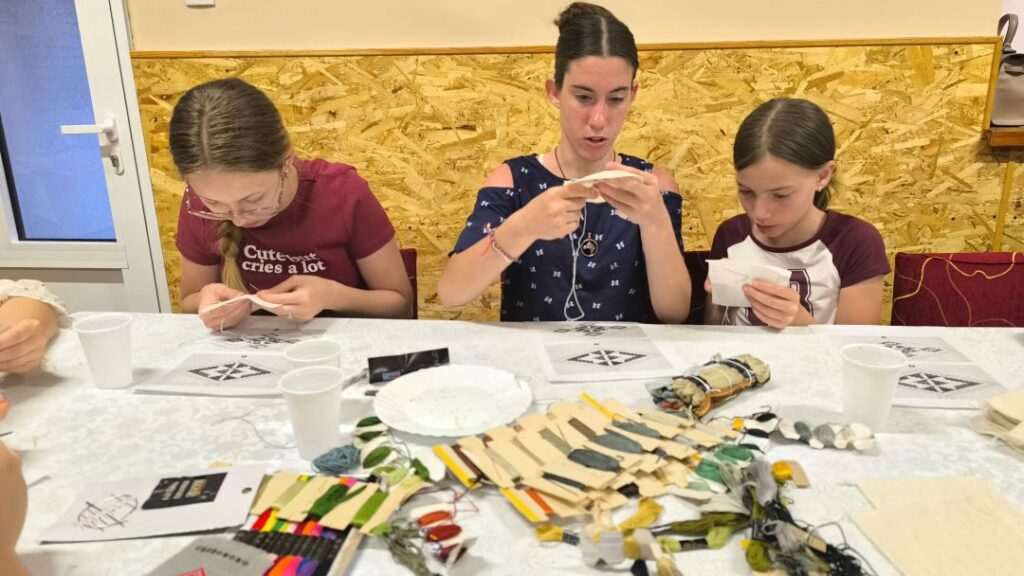
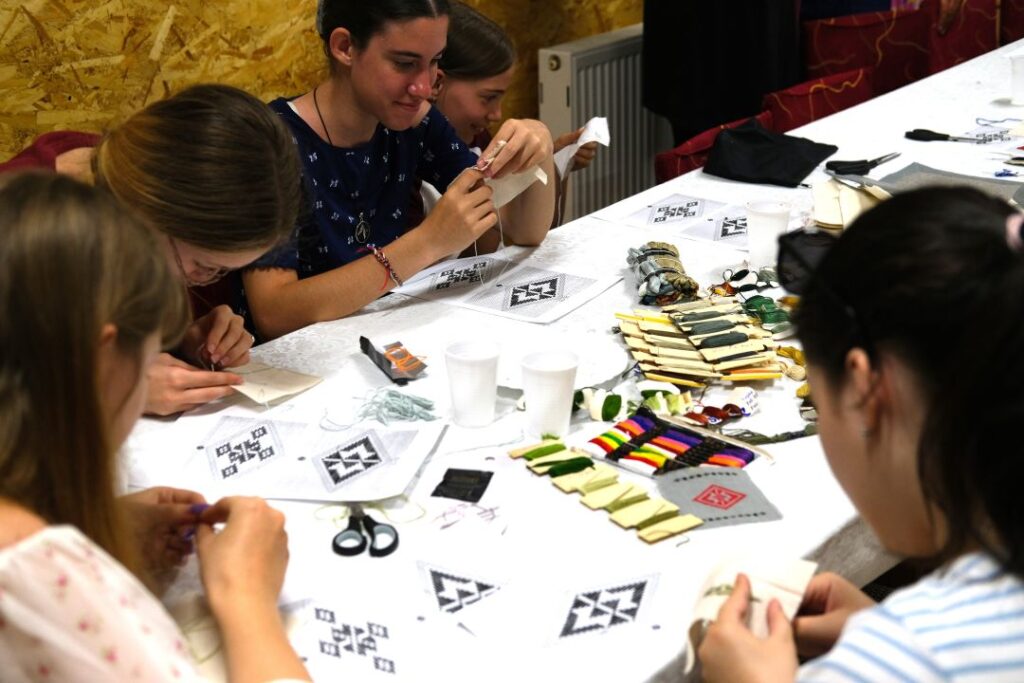
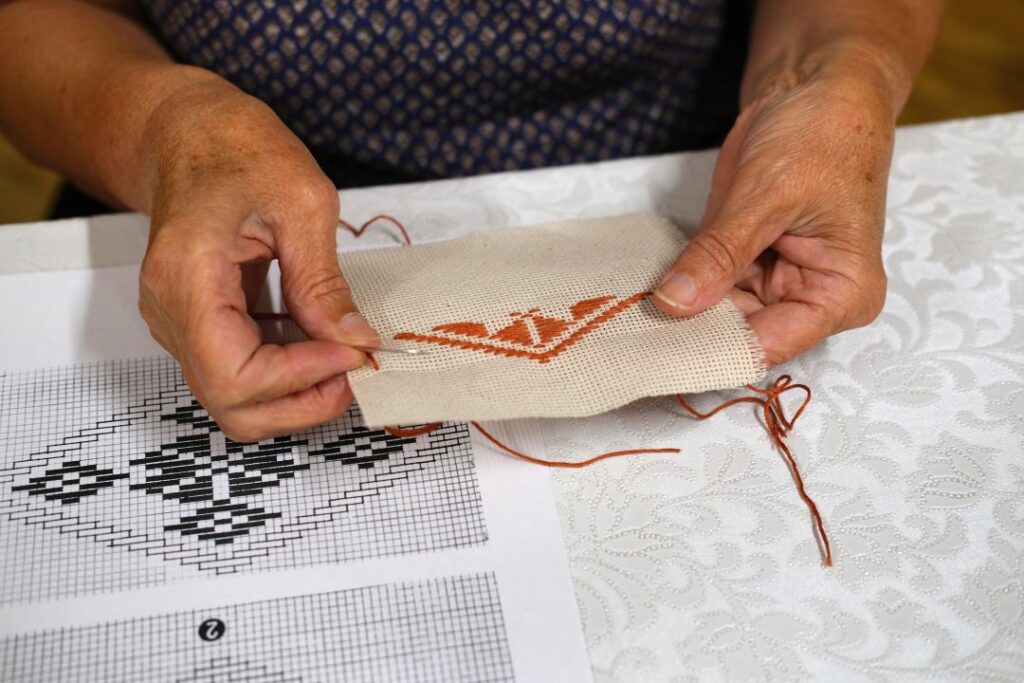
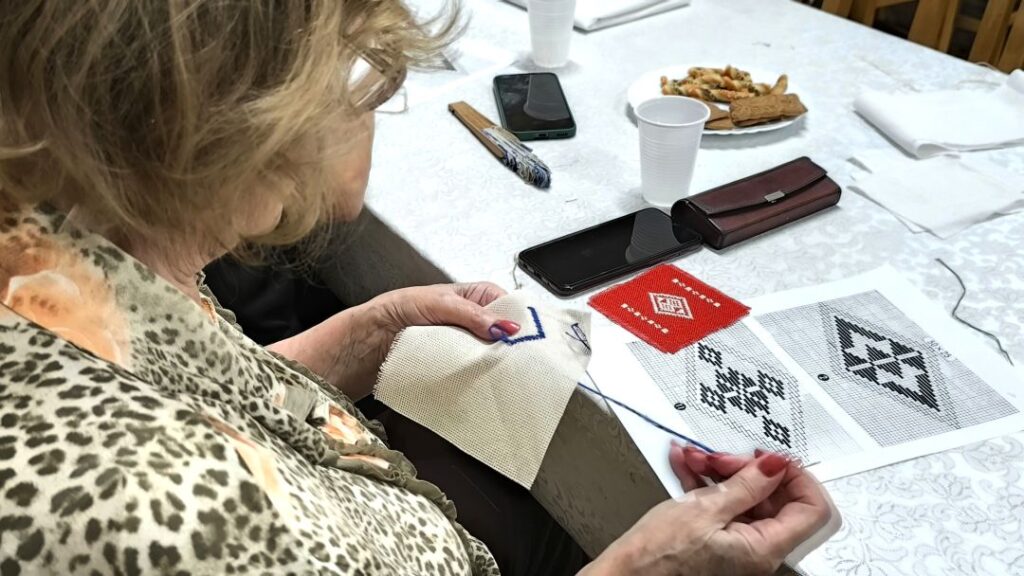
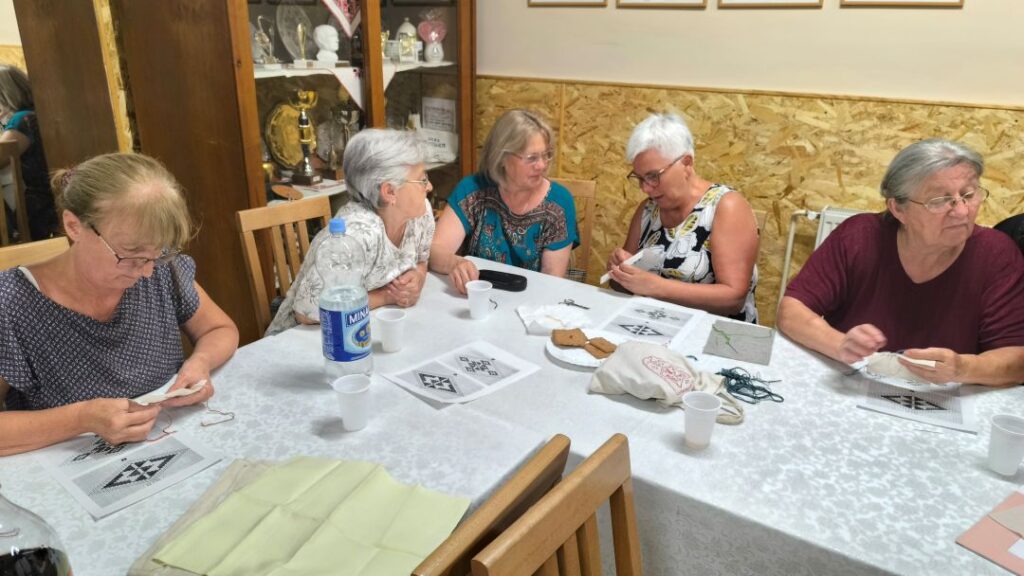
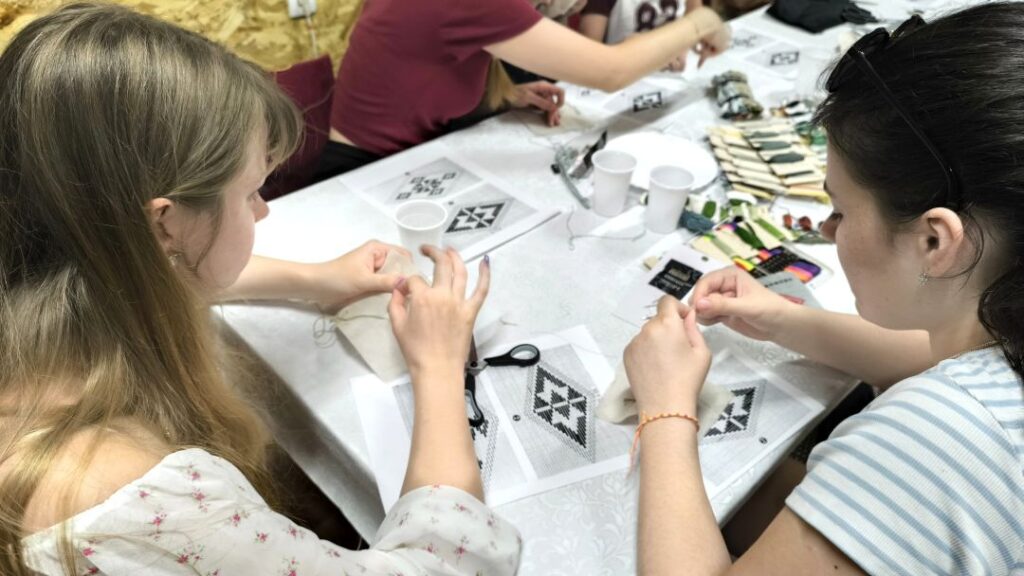
This summer, she held a workshop on Nanbu hishizashi embroidery, where participants deepened their understanding of the commonalities and differences between the traditions by learning about the background and history of the traditional Székely embroidery techniques.
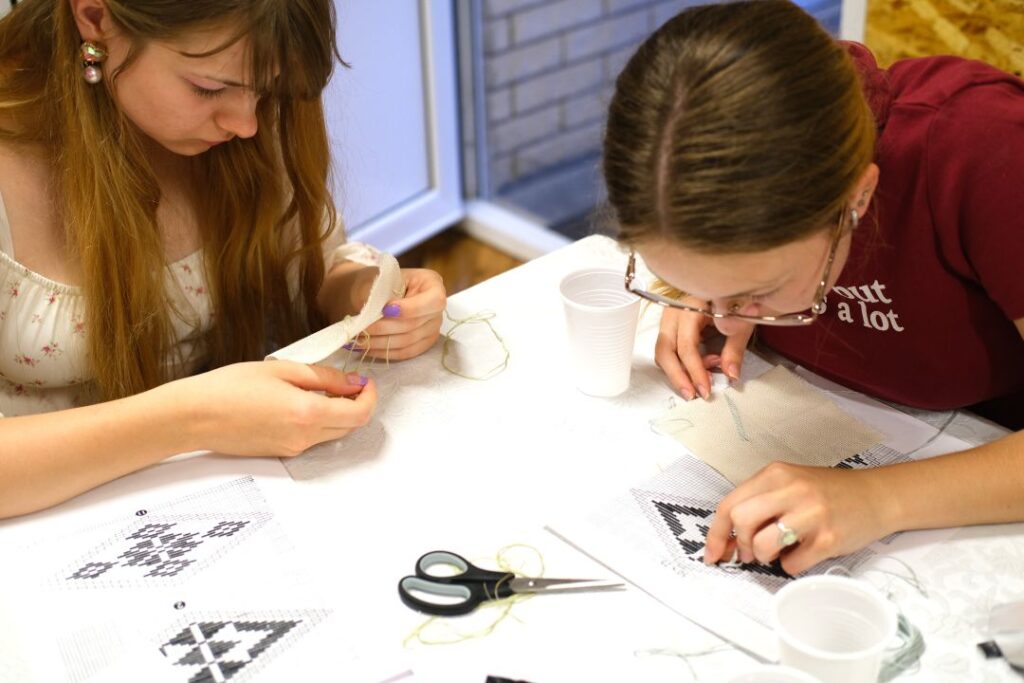
They then exchanged opinions about these traditional cultures, and each participant engaged in their own creative work using hemp cloth and embroidery threads of different colors. She aims to continue deepening ties with the Székely community through workshops and spending time together.
Project in Serbia: April 2025 onwards
Exchange partner: Tamási Áron Székely-Hungarian Cultural Association
First workshop: July 1, 2025
Venue: Tamási Áron Székely-Hungarian Cultural Association
***Excerpt from Lea Embeli’s journal***
I discovered that colorful linen fabric is not easily available in Serbia and is not used for embroidery. Both Székely and traditional Serbian embroidery typically use white or natural cotton fabric.一般的です。
However, I felt that such traditional fabrics can be quite challenging and elderly people with weak eyesight and beginners, and the fine weave can also become a psychological barrier. Therefore, this time I deliberately chose not to strictly adhere to traditional materials, and instead prepared various fabrics with different weave densities so that participants could select what suited them best.
I feel that this flexible approach helped create an atmosphere that was more accessible for those with no embroidery experience and for those who had been hesitant to participate.
This workshop was a series of new experiences for me. It involved many emotions throughout the preparation, implementation, and the sense of responsibility in carefully conveying a technique that is not from my own culture. Nevertheless, I can confidently say that it was ultimately a success.
I strove to share knowledge carefully and thoughtfully, and also told participants about the people I met in Aomori. These stories seemed to leave the deepest impression.。