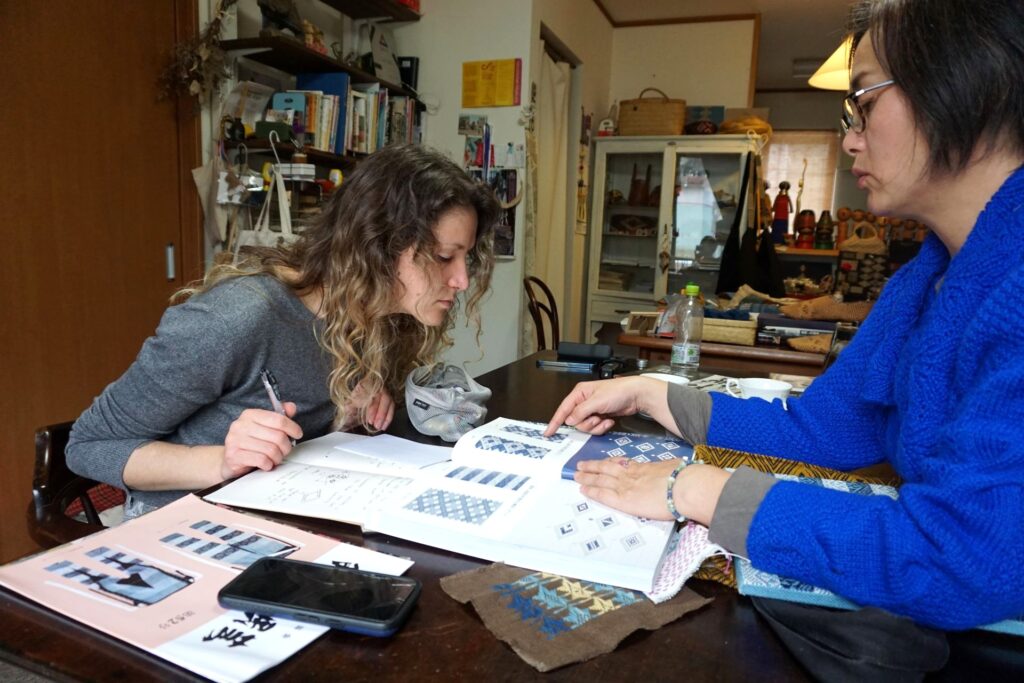

TURN is supporting international student Lea Embeli’s project in her home country of Serbia. By focusing on the Székely minority community, she seeks to connect with local residents and their way of life through their traditional embroidery culture.
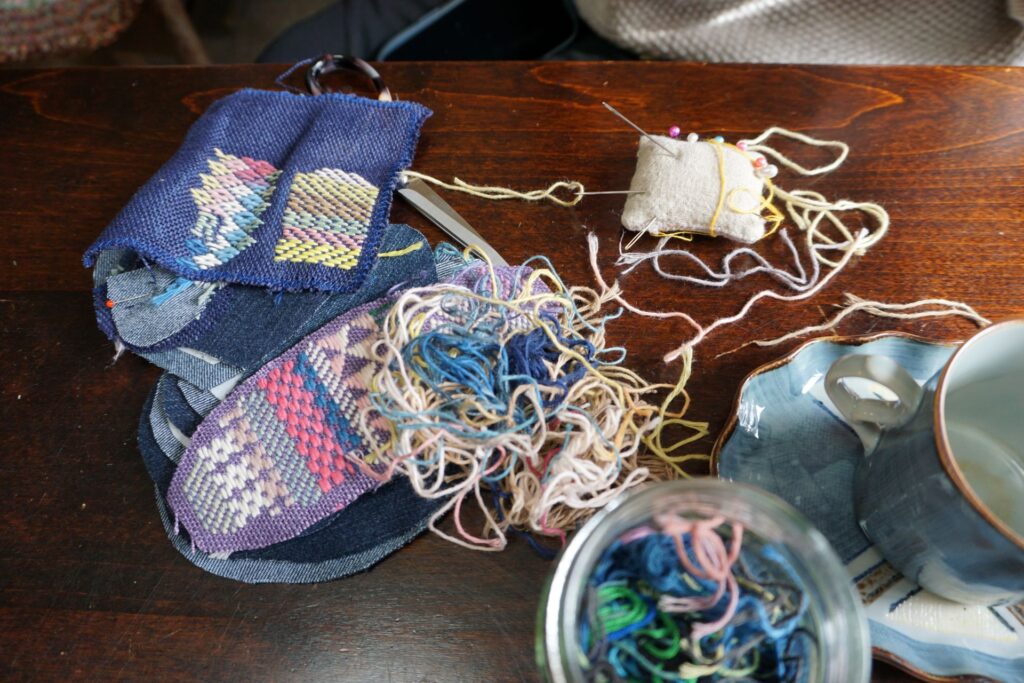
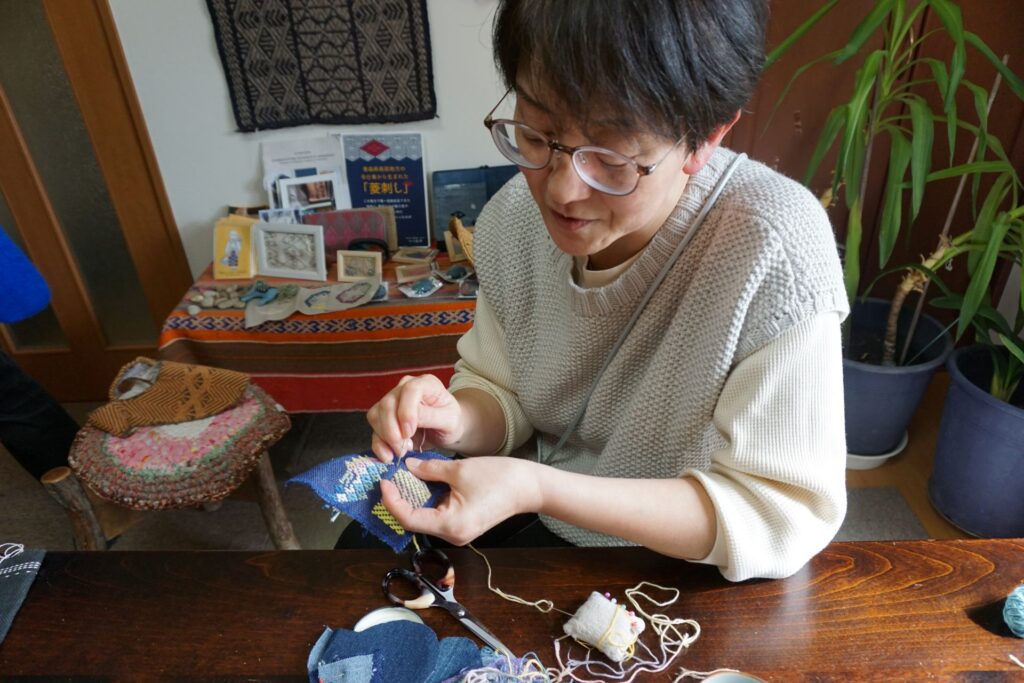
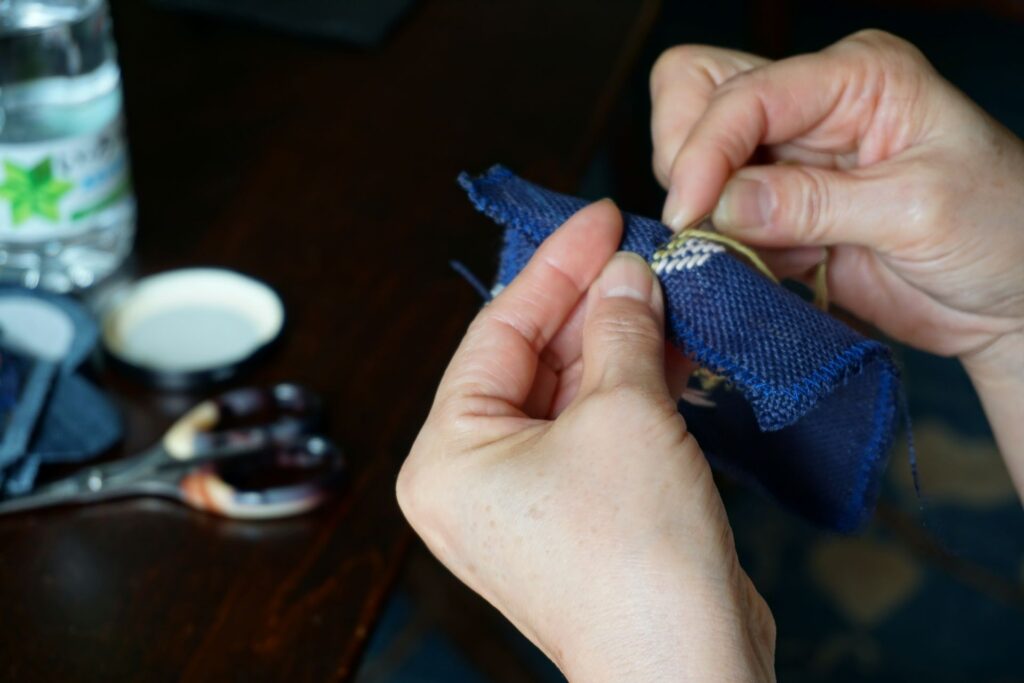
Lea Embeli found affinities between the embroidery cultures of the Székely community and Nanbu hishizashi from Aomori Prefecture. Building on this insight, she learned Nanbu hishizashi embroidery and researched Aomori’s sashiko culture, and brings these traditional practices to her home country to create opportunities for exchange with the Székely community.
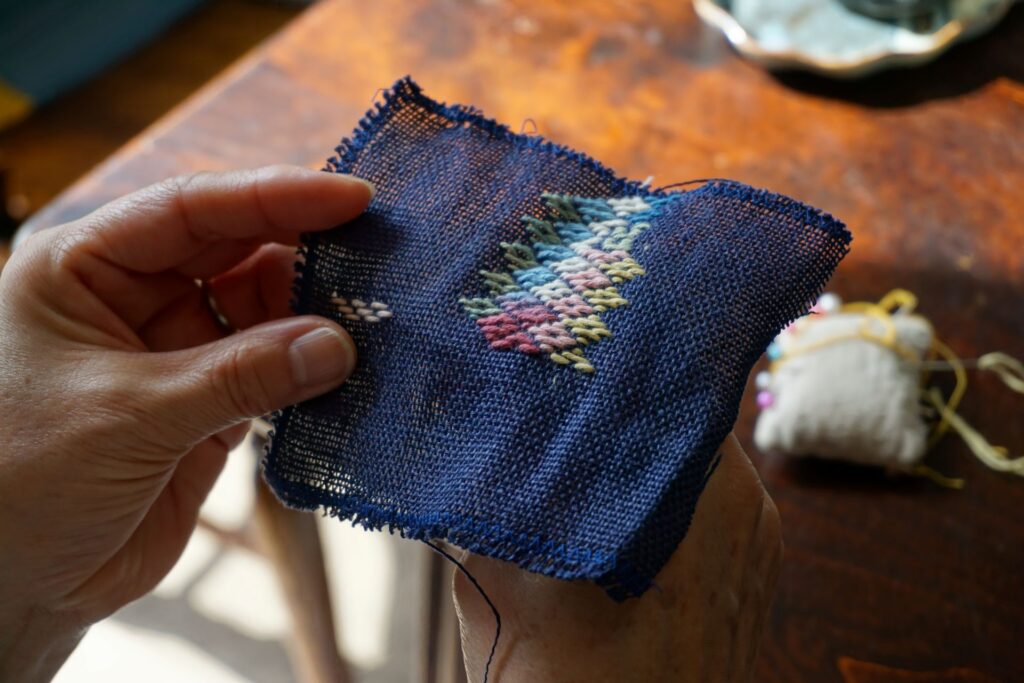
While practicing and researching Nanbu hishizashi, she learned about the differences from kogin-zashi in the Tsugaru region, as well as the distinctive stitching methods and cultural background specific to Nanbu hishizashi. She also experienced contemporary approaches to tradition, methods of preservation, and the communities foster traditional techniques.
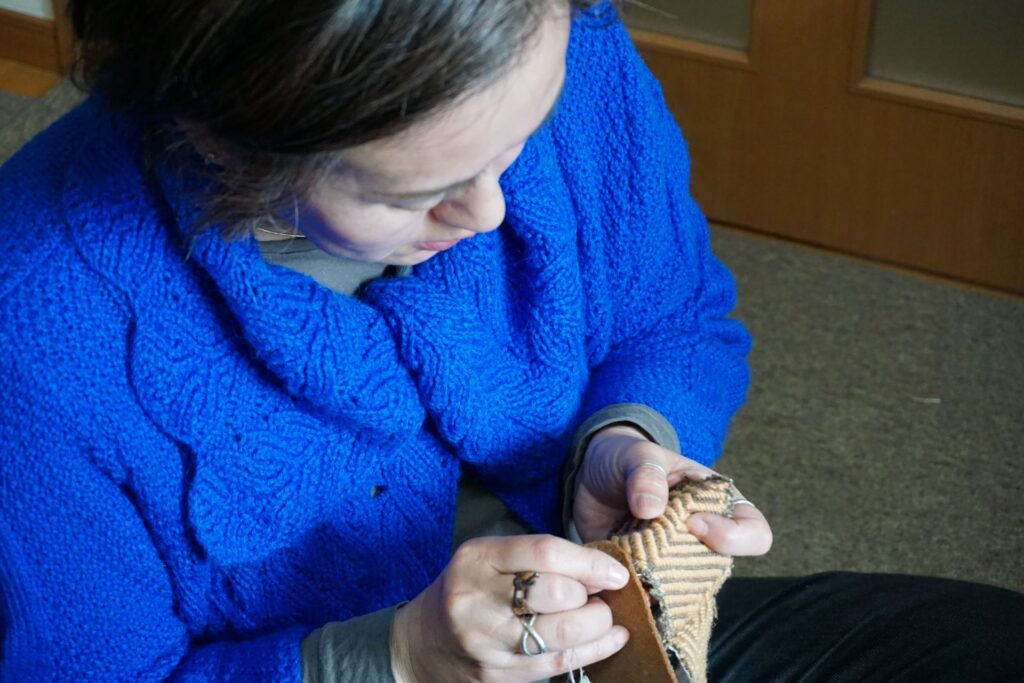
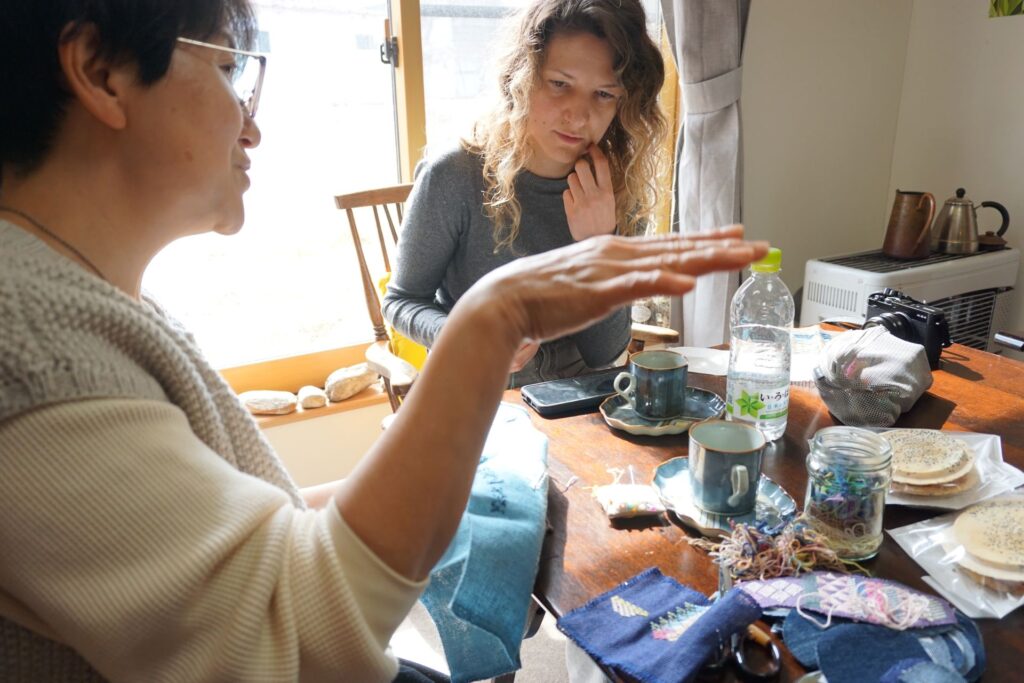
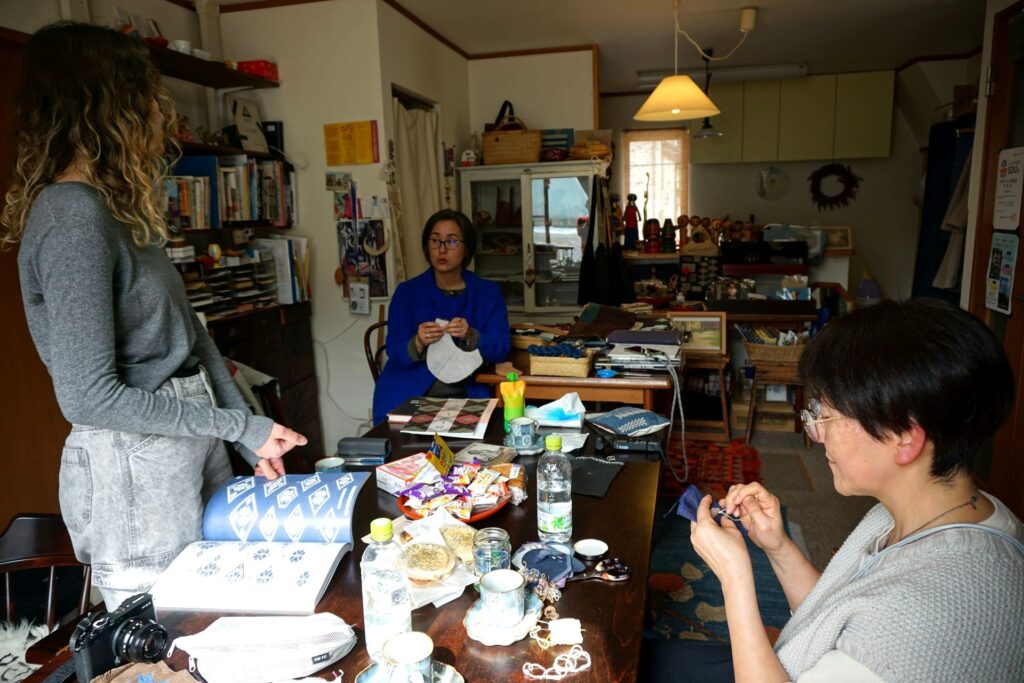
She joined Nanbu hishizashi classes at Nanbu Mingei, where people from diverse family and work backgrounds gather with needle and thread for lively conversation.
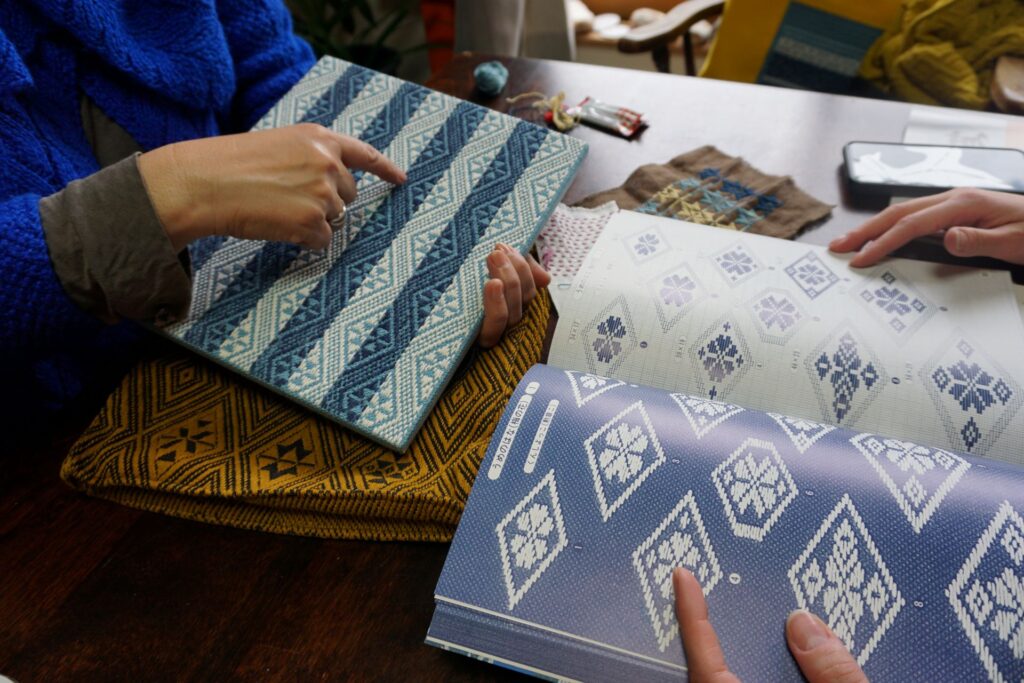
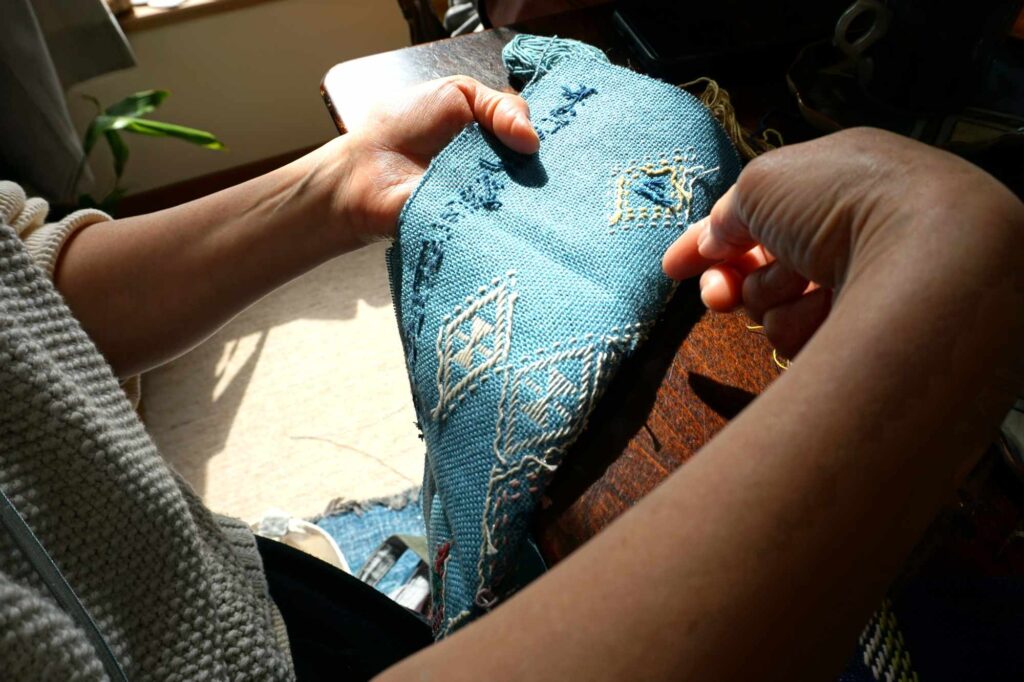
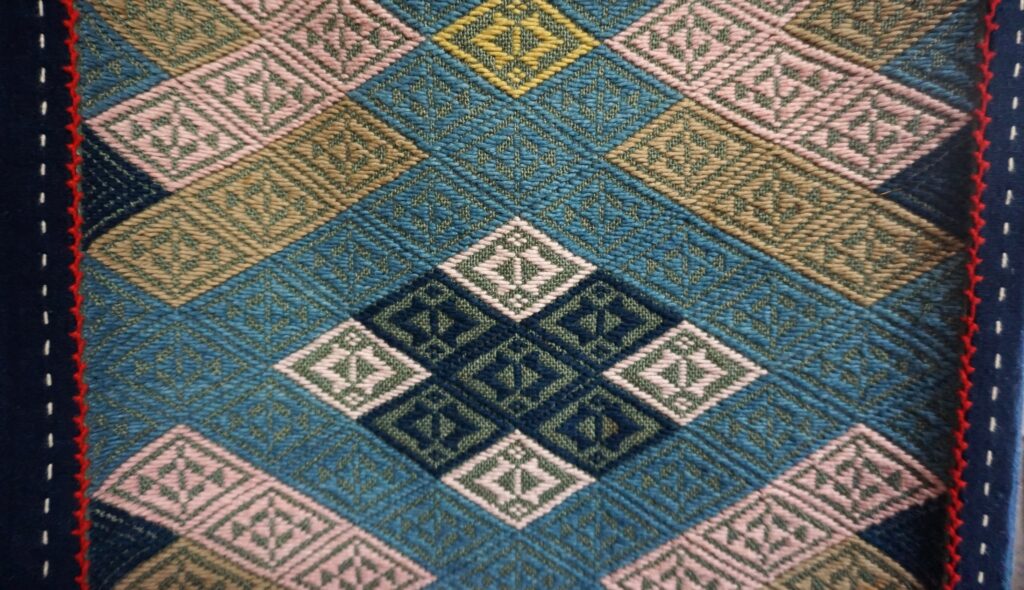
Based on the distinctive diamond-shaped patterns used in Nanbu hishizashi, the technique is surmised to have originated approximately 200 years ago. The beautiful embroidery emerged within daily life and developed into a handcraft through the region’s harsh winters. We look forward to the unfolding engagement with Székely community as they encounter the regional characteristics and culture of this traditional technique.。
Nanbu hishizashi training: March 2-9, 2025
Serbia project: from April 2025
Exchange partner: Tamási Áron Székely-Hungarian Cultural Association
※Nanbu hishizashi: One of the sashiko embroidery techniques passed down in the Nanbu region on the Pacific side of southern Aomori Prefecture. While kogin-zashi embroidery from the Tsugaru region picks up an odd number of vertical threads, Nanbu hishizashi picks up an even number of vertical threads.
In the past, the technique was taught to young people by mothers and grandmothers, who stitched patterns during breaks from fieldwork or while caring for children. The rhythm of the work aligned with the intermittent lifestyle and temperament of farming. New aprons decorated with Nanbu embroidery were worn for weddings and special occasions, and later used as work clothes once they became worn out.

Lea Embeli
Born in Pančevo, Serbia. Graduated from the Faculty of Applied Arts, Department of Applied Painting at the University of Belgrade in 2017, and completed her master’s degree in 2018.
In 2021, she received a MEXT government scholarship and joined the Oil Painting department in the Graduate School of Fine Arts, Tokyo University of the Arts as a research student and completed the master’s degree program in March 2025.
Honors include scholarships from the Ministry of Education, Science and Technological Development and the Foundation for Young Talents of Serbia, the Aleksandar Tomašević Award for academic excellence, the ULUPUDS Award in the field of applied painting, and the Vučković Award for young artists.
In addition to painting, she also does book illustration and animation work.